The Village of Norwalk: A Brief History
Gateway to the Tunnels — Archival historical photographic timeline tracking our community roots.
Norwalk, Wisconsin was given its name by Selium McGary, one of the pioneers of Monroe County, who named it after Norwalk, Ohio, where he had previously lived. It is located on what was once the main line of the Chicago and North Western Railroad, which in the 1960s was famously converted into the legendary Elroy-Sparta State Bike Trail.
Norwalk is located on the northern edge of the Kickapoo River Valley. Moore Creek, a tributary of the Kickapoo River, runs directly through the Village, while the main artery of the Kickapoo River itself navigates through our neighbors in the Village of Wilton to the southeast. The Kickapoo River Valley is nestled beautifully in Wisconsin's renowned Driftless Area—the only region in the entire state completely missed by massive, crushing glaciers during the last Ice Age. Due to this unique geological history, our steep hills and rolling valley ecosystems stand in beautiful contrast to the flat plains found elsewhere in the state.
Visual Chronology
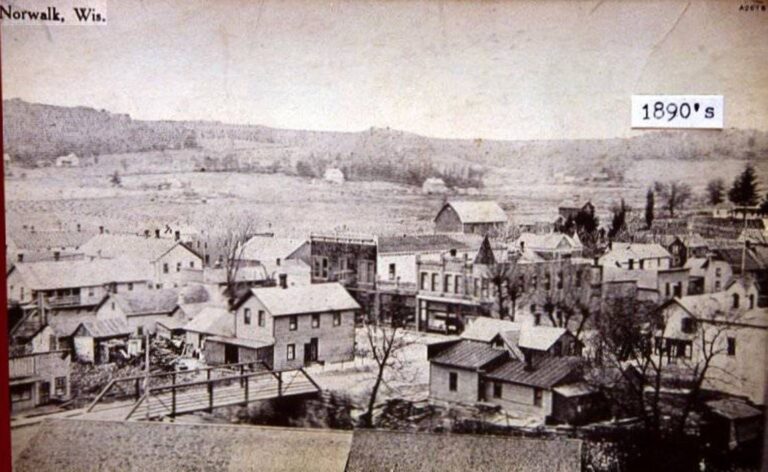
Norwalk Landscape Panorama
Captured from high ground elevation parameters, this viewpoint frames the structural layouts of early residential expansions tracking across the Driftless valley layout segments.
View Archival Entry: Aerial View (1890s) →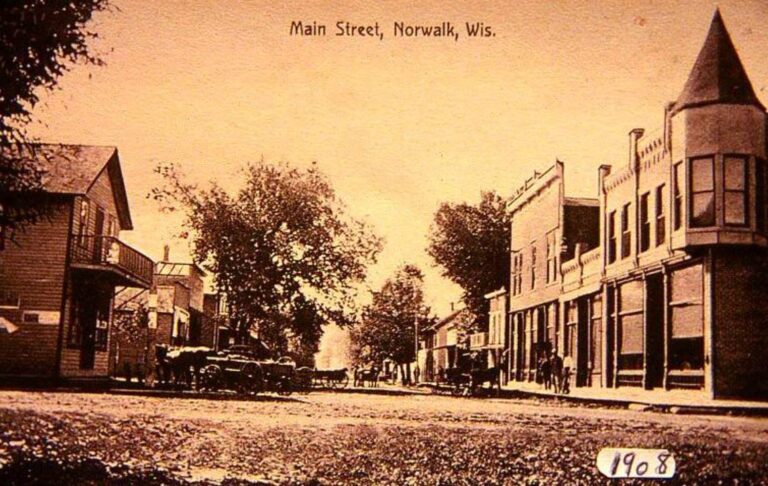
Main Street Commerce Infrastructure
Early business storefront extensions, board walks, and dirt corridors. This strip established Norwalk as a core trading hub for regional agricultural property developers.
View Archival Entry: Main Street (1908) →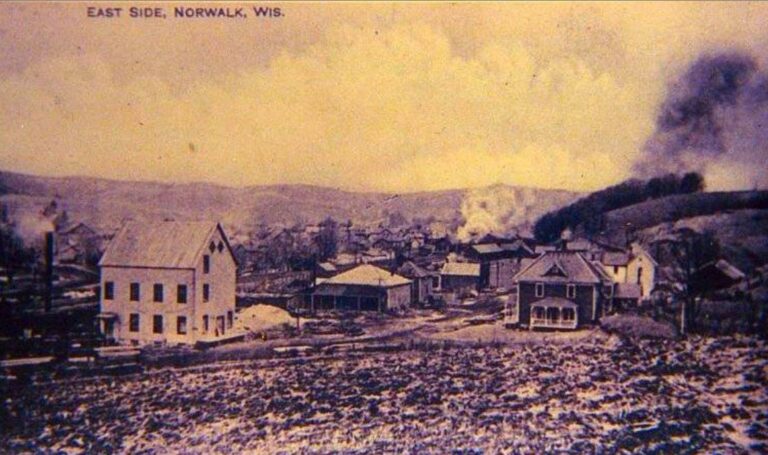
East Side Valley Neighborhoods
Looking outward toward the rising hill lines surrounding the village. This captures the residential perimeter balance set cleanly against open Monroe County countryside fields.
View Archival Entry: East Side (Undated) →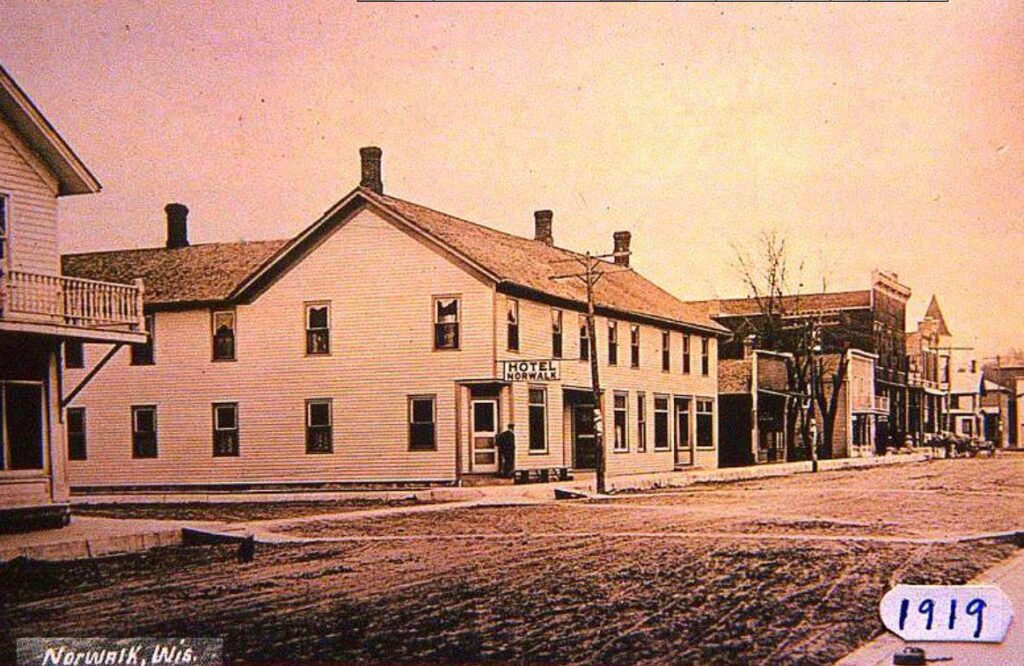
The Historical Hotel Norwalk
A premier destination structure welcoming commercial rail operators, trade vendors, and travelers stepping off lines moving through the iconic local tunnels.
View Archival Entry: Hotel Norwalk (1919) →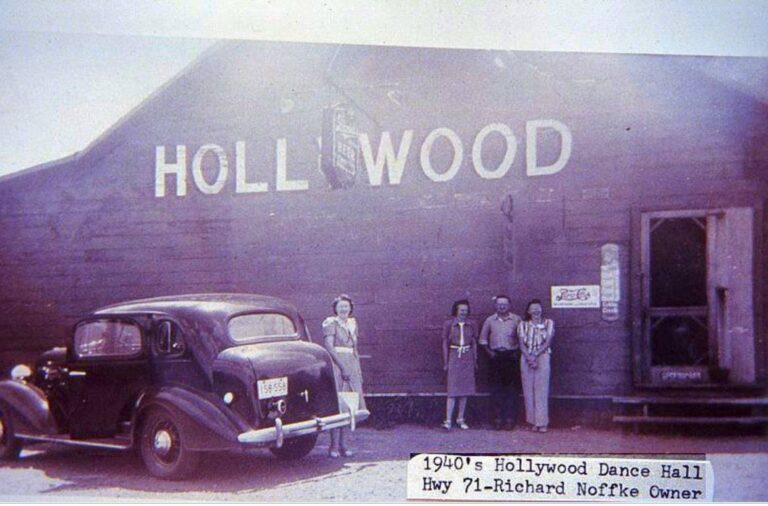
Hollywood Dance Hall Assembly
A focal gathering center for mid-century local entertainment, music, and community holiday festivals. Pictured within this archival record layer is local citizen Richard Noffke.
View Archival Entry: Hollywood Dance Hall (1940s) →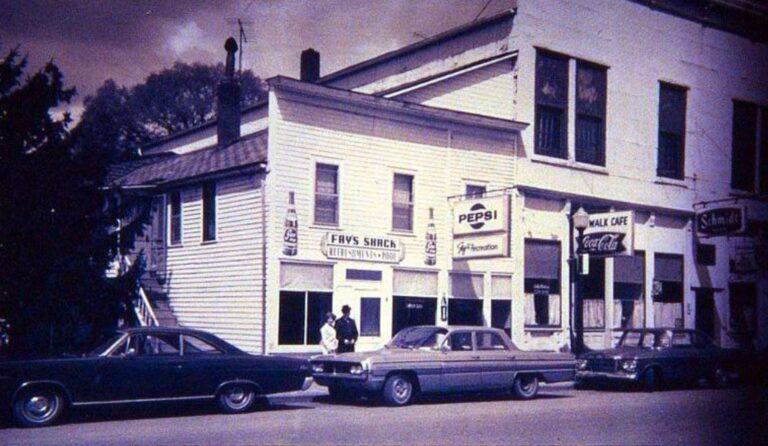
Fay’s Shack Diner Operations
A nostalgic look back at a classic mid-century local storefront. Framed inside this timeline photograph are business operators Mr. and Mrs. Fay McCracken.
View Archival Entry: Fay’s Shack (1960s) →Past Presidents & Trustees
Historical timeline records of municipal leadership representation.